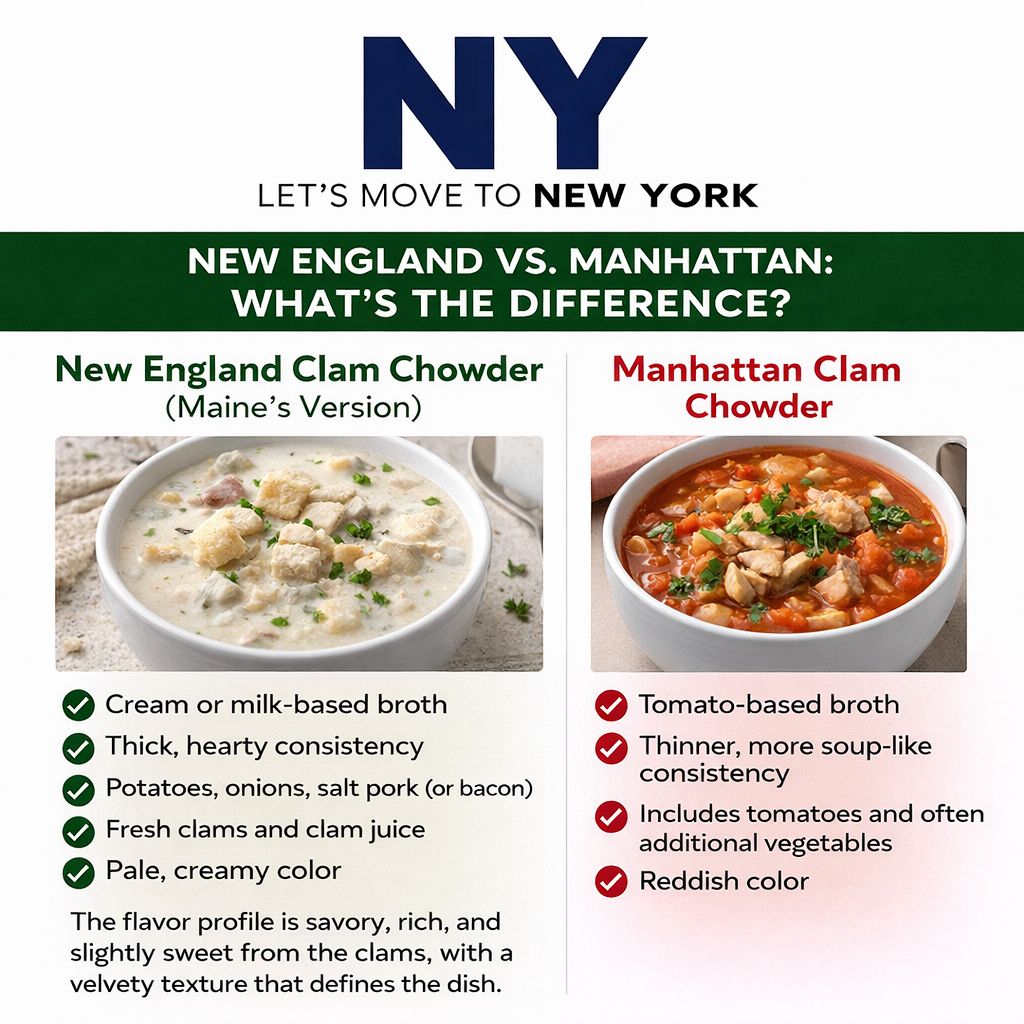
While Maine proudly claims New England clam chowder as its culinary signature, New York State stands firmly behind its own distinctive version: Manhattan clam chowder. Brighter, lighter, and built on a tomato base rather than cream, this variation reflects the diverse cultural influences that shaped New York’s food traditions.
For those relocating to New York — or simply exploring regional American cuisine — understanding Manhattan clam chowder offers insight into the state’s immigrant history, urban markets, and evolving coastal food culture.
A Soup Shaped by Immigration and Urban Flavor
Manhattan clam chowder emerged in the late 19th and early 20th centuries, heavily influenced by Italian-American communities in New York City. Tomatoes, a staple in Southern Italian cooking, replaced dairy in traditional chowder recipes, creating a broth that was both lighter and more acidic.
Unlike the rich, creamy chowders of northern New England, Manhattan clam chowder developed as a vegetable-forward seafood soup — hearty, but not heavy.
It is especially popular in:
- New York State, particularly New York City and Long Island
- Northern New Jersey
- Connecticut (downstate regions)
- Parts of Florida, where many New Yorkers have relocated
- Urban coastal communities with strong Italian-American influence
Today, it remains a staple in classic New York delis, diners, seafood restaurants, and home kitchens.
Two Regions, Two Identities
The contrast between Manhattan and New England clam chowder is more than culinary — it reflects geography and culture.
- New England chowder speaks to small coastal towns, fishing villages, and dairy-rich traditions.
- Manhattan chowder reflects urban diversity, Mediterranean influence, and bold flavors.
Neither is objectively superior. Each is a product of its environment.
For those relocating between regions — whether from Maine to New York or vice versa — sampling both versions is a simple and delicious way to understand local identity.
Just be prepared: in both places, locals will tell you theirs is the original.